
AI-Empowered Dedicated Teams: How AI Changes Structure and Delivery Speed
AI coding tools make individuals faster. Dedicated teams only get faster to production when structure, review capacity, and product intent change with the tools.

A nearshore engineering team assembled for your roles and ways of working — exclusive to your roadmap for 6+ months. EU contracts, predictable billing, 100% IP yours.
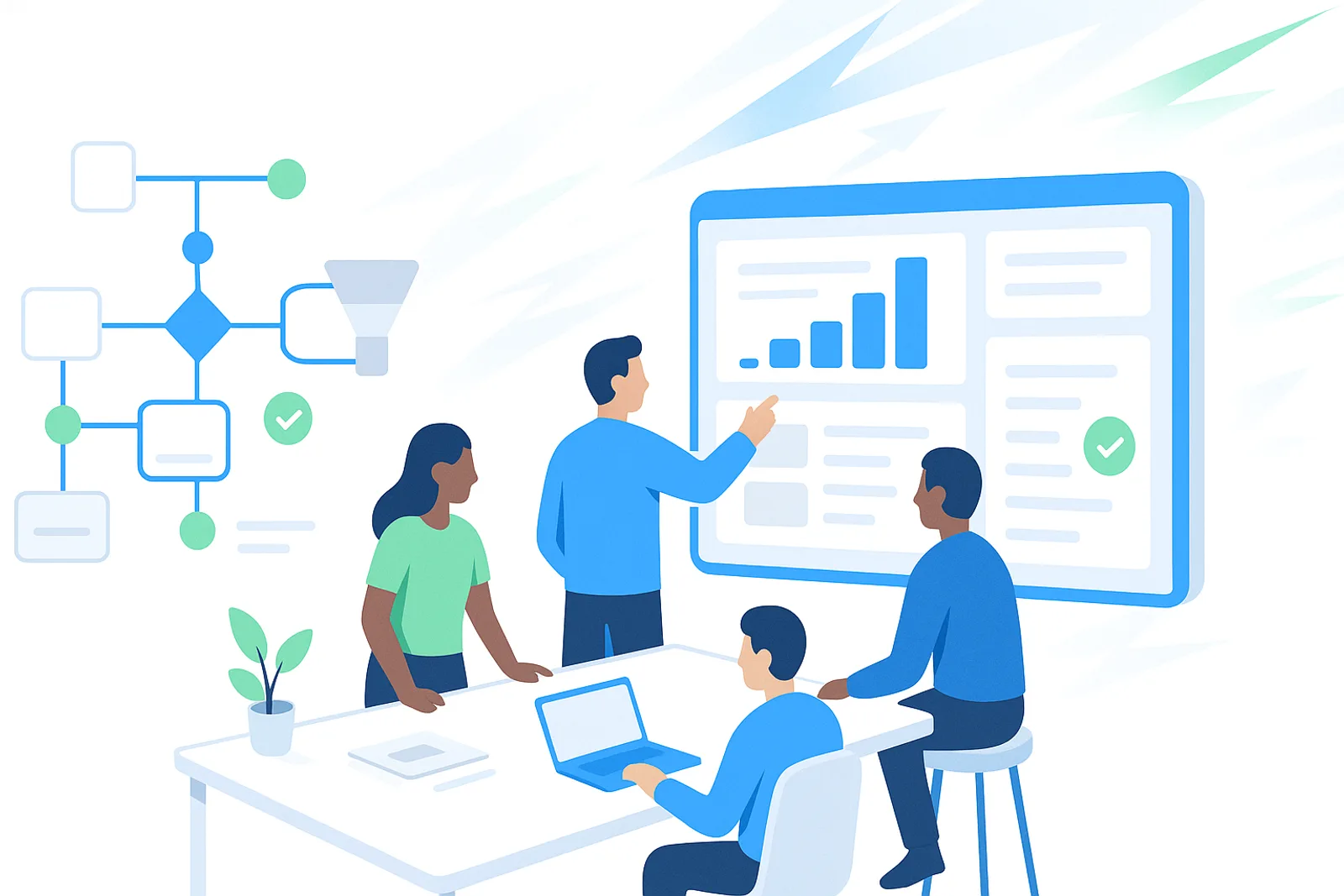
Every engineer on a D-Factor team works with AI coding tools under a defined usage policy — not ad hoc. Code review criteria, CI quality gates, and role-based training are in place before the first sprint. You get the productivity upside of AI without the code quality and security risk that ungoverned AI adoption introduces.
Reputation review, process audit, technical interviews, a real test project, and a partnership review. Most applicants don't make it through. You only ever see teams from the other side of that filter.
D-Factor operates under Polish (EU) law. Contracts are clear, invoicing is straightforward, and 100% of the IP developed by the team belongs to you. EU jurisdiction — no ambiguous cross-border contract layers.
You pay for actual time worked. Vacations, sick days, and public holidays are not billed to the client. No unexpected charges, no overhead surprises.
Two ways to bring a dedicated development team into your delivery setup — choose based on how much you want to own the technical direction.
Your tech lead or engineering manager owns architecture and sprint planning. D-Factor provides senior and mid engineers by stack who plug into your existing workflow and tooling. We manage team stability, culture, and performance — you focus on the product.
A self-sufficient cross-functional team that owns a product slice end-to-end. Works to your goals and roadmap, operates independently, and integrates with SAFe, LeSS, or your own delivery framework. You set the outcome — the team handles the rest.
A cross-functional unit covering backend, frontend, QA, and optional DevOps or BA — all in one coordinated team. No external queue per role. Designed for end-to-end feature delivery within a product slice.
Need only backend developers, only QA, or only mobile? We place 1–N same-role specialists who work under your TL or EM. The fastest way to close a specific headcount gap without changing how your team operates.
Your PM/PO and architecture are already in place — you need execution. Devs and QA deliver without a dedicated BA from our side. Part-time DevOps added when needed.
Tightly coupled to a single product backlog and flow metrics. Like a Full Functional Team but scoped to one domain — predictable throughput, clear ownership, suitable for SAFe or LeSS structures.
Your tech lead drives solution design and architecture decisions. D-Factor provides senior and mid engineers by stack. No dedicated TL from our side — your direction, our engineering capacity.
Some roles are your in-house staff, the rest are D-Factor. Works when you own part of the stack — for example, client-side mobile development paired with D-Factor backend and QA.
| Feature | In-House | Outstaff | Outsource | Dedicated Team |
|---|---|---|---|---|
| Time to First Engineer | 3–6 months | 2–4 weeks | 1–2 months | 4–6 weeks |
| Team Cohesion | High (if retained) | Low — assembled per role | Vendor-managed | Pre-formed — engineers worked together before onboarding |
| Technical Control | Full | Full | Low — vendor owns the process | Full — client retains architecture and product governance |
| Who Manages the Team | You — HR, performance, culture, attrition | You — coordination falls back on your TL | Vendor — black box | D-Factor — stability, culture, and performance managed for you |
| Legal & IP Clarity | Local employment law | Varies by contractor country | Varies by vendor country | EU law (Poland) — IP 100% client-owned, written into every contract |
| True Cost per Engineer | Gross salary + 35–45% employer overhead: payroll taxes, pension, health insurance, paid vacation (20–25 days/yr), sick pay, equipment, and recruiting fee (15–25% of annual salary). A €80k developer costs €110–120k/yr all-in. | Day rate × days logged. Vacation and sick days are typically billed. You absorb coordination overhead internally. | Fixed project fee. Change requests and scope additions billed separately. Real cost often exceeds estimate. | Monthly flat rate for actual days worked. Vacation, sick days, and public holidays are not billed. No recruiting fee, no equipment cost, no employer taxes. |
We document your engineering needs, required tech stack, team shape preference, and delivery governance model. A fractional CTO or team lead joins to align on expectations and confirm the engagement structure before any hiring begins.
We select engineers from our pre-vetted pool against the agreed profile. If you want to review and approve candidates yourself, this phase extends to 4–8 weeks. Roles come online in sequence — the first engineer can start while the rest of the team finalises.
Engineers are introduced to your codebase, tooling, and communication norms. Development environment, access, and sprint rituals are set up. The first deliverables are scoped and assigned.
The team runs its first full sprint cycles under real delivery conditions. D-Factor monitors velocity, addresses process friction, and fine-tunes the operating rhythm with your engineering lead or PM.
Predictable delivery cadence and performance baselines are established. The team operates as a fully embedded unit. Most clients extend well beyond the initial 6-month term.
AI coding tools make individuals faster. Dedicated teams only get faster to production when structure, review capacity, and product intent change with the tools.
What a Forward Deployed Engineer does, which skills matter, and why FDE closes the gap between demos and production — especially for outstaffing and applied AI delivery.
AI raised the hiring bar. What employers actually require from software engineers, which skills to grow, and how to update job specs and interviews.
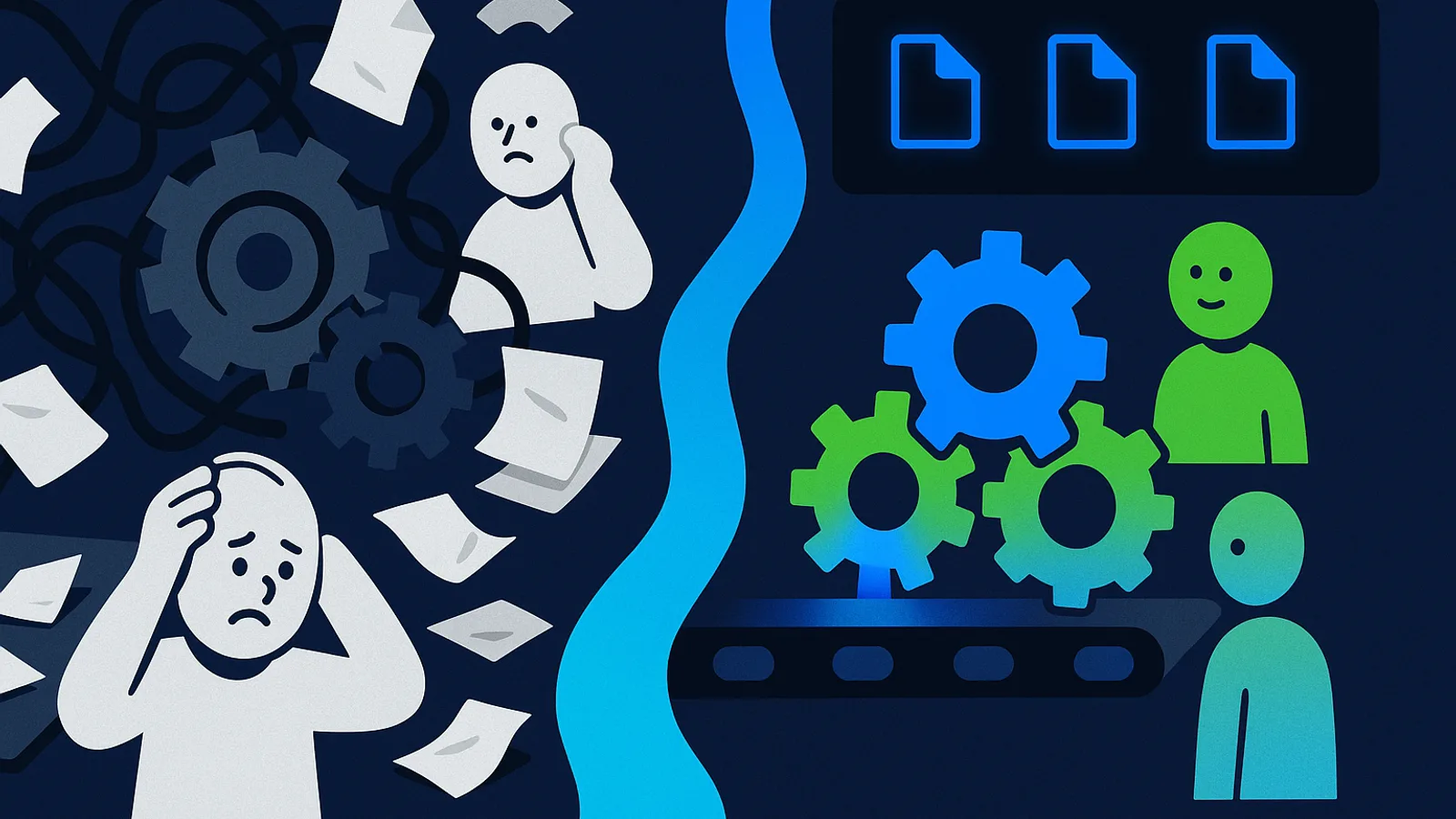
Software outsourcing does not fail because the model is broken. It fails when buyers confuse capacity with product ownership. Here are the myths, real failure modes, and the conditions that make vendor teams work.
Outstaffing and outsourcing fail when the vendor becomes the only holder of product expertise. A practical playbook for CTOs: keep ownership of backlog, architecture, and domain knowledge while buying delivery capacity.
A practical look at how to vet a nearshore dedicated development team — reputation, process, technical interviews, a real test project, and partnership review — before anyone joins your roadmap.
AI will not erase software teams overnight — but it will change which skills pay off. A practical map of what to learn, what to hire for, and what to ignore as fashion.
Generic AI workshops rarely change how teams work. Custom training — scoped to your stack, roles, and delivery risks — with online or on-site delivery and certification at the end.
Most scale-ups try outstaffing first. Here is why it works at the start and fails at scale — and what a dedicated development team actually changes.
The first two weeks of a dedicated team engagement determine the next six months. Here is what to prepare before they start — and what to do in the first sprint.
Outstaffing works at the start. These are the signals that tell you it has stopped working — and what the transition to a dedicated development team actually involves.
When you need an extra engineer fast, two paths appear: hire a freelancer or go through a Developers on Demand service. Here's how they actually compare.
Most companies run IT audits reactively — after something breaks. The companies that scale well do them proactively, and here's what they find.
Leave your request in the form or book a call with our specialists. After that you can get a free consultation on your project or direct access to our verified staff database.